With Kate Pinsonneault
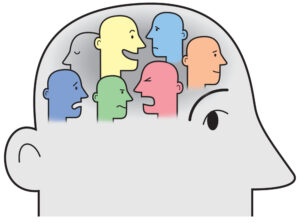
We all have parts of us that help us in certain situations and relationships. You may have noticed that we act differently when we’re with our mother, a best friend, a child, or a respected elder. Our behaviour also changes when we’re at church, school, work or at a party. Those are different parts showing up in ways that help us feel accepted or protect us from relationships that make us feel uncomfortable. Think about parts that may show up when you feel threatened, when you are appreciated, or when unreasonable expectations are put on you. Our parts help us deal with day-to-day situations and adapt to different relationships.
If we have experienced a traumatic event or relationship, these parts can get stuck in a protective role and will continue to act in ways that kept us safe or helped us survive. This might be a part that shuts us down, a part that cannot tolerate conflict, one that might need to control, another that gets anxious, or a part that suddenly bursts out in anger. These parts take over in impulsive, reactive ways and are outside our control. They come from a part of our lower brain that ensures our safety and acts before we can engage our thinking brain. They often leave us wondering, “Why did I respond that way?” Often we realize that was not what we wanted to do or say. Have you ever heard someone say, “I didn’t mean that,” or “I don’t know why I did/said that?” Well, that was because it wasn’t them deciding, but a protective part that reacted.
Richard Schwartz, the founder of IFS, describes the mind as naturally made up of different parts. He recognized that we have parts trying to protect us. Some act to prevent things from going wrong, like a people-pleasing part, a part that worries, or a perfectionist part. But if something does feel wrong, we have parts that react instantly. This could be a part that is quick to blame, a part that makes us feel small, or an aggressive part that can lash out in anger. Richard also discovered that these protective parts exist because we also have younger parts of us that are still feeling hurt, fear, overwhelm, injustice, or shame from traumatic experiences. These vulnerable parts often hold negative beliefs about themselves (I’m not good enough, I’m not worthy of love, I’m bad, etc), or about others (I can’t trust anyone, those I love abandon me, People will hurt me, etc). These beliefs are based on their experiences and are a tremendous burden for these young parts to carry. But he also realized that these parts can be helped, and when they are unburdened of these beliefs, protective parts can relax, allowing our authentic Self to take the lead. When that happens, we feel open, calm and able to make decisions that are best for us and our relationships. When people are led by their true Self, they are curious, courageous, caring and compassionate, confident, clear, creative and able to connect with others with an open heart.
We all have parts that we don’t like – The part that wants to eat another cookie or another drink, a part that is harshly critical of you, a part that yells at the kids, a part that can’t say no or set healthy boundaries, a part that ruminates and won’t let you sleep, or a part won’t allow you to say what you think, feel or need. But all of these parts are trying to help you in the only way they know how. Getting to know your parts can be really helpful. Asking them about their role or intentions and listening for their answer can help:
When did you first need to protect me this way?
What do you need me to understand?
What would happen if you didn’t do this job?
Helping them know who you have become can also help. Show them where you live and who is in your life now. Ask if they have any questions. Let them know how you handle challenging issues and how you keep yourself safe now that you are an adult.
An important concept in IFS is that no parts are bad. All protective parts have good intentions. We never want parts to go away; we want to free them of the burdens they hold so they can be functional and helpful rather than impulsive or reactive. We want to understand what drives their behaviour. These parts know how much each of us has been hurt, and they know the burdens younger parts have had to carry. They don’t want us to feel hurt, alone, or unloved, and they have been working hard for many years to make sure that never happens again. They need to know that our Self is there, capable of handling things and making wise decisions. Protective parts often feel relief that they realize they aren’t alone and don’t need to work so hard.
When we feel overwhelmed, hurt or scared, a protective part may take over. We might get upset, shut down, or try desperately to control a situation. If you notice a part taking over, pause and get curious. Shifting from “I am angry” to “A part of me is reacting with anger. I wonder why it feels the need to do this?” Asking why a part needed to take over in that moment can also help you get some insight into what this part is protecting you from. Has an old hurt been triggered? Once you understand, you can let the part know how you would like to respond to the situation and ask it to trust you to take the lead.
IFS recognizes that younger parts carry difficult experiences from the past that are linked to the need for protection. For example, someone who experienced rejection may believe they are unwanted, so a protective part might become extremely independent: “I don’t need anyone.” Another person might develop a people-pleasing strategy: “If I keep everyone happy, then they will be nice to me, and I can feel safe.” Or if someone grew up with abuse, the best strategy may have been to hide and be small, quiet and unnoticed. Different strategies develop depending on what was needed during that difficult time. And while these protective strategies may have helped when they were a child, they can become problematic later on in life.
When these young, vulnerable parts feel heard, understood and supported, IFS can help them get out of the traumatic situation they have been stuck in and get them to a place where they can feel safe and cared for. It is only when they feel a connection to the Self and know that their needs will be met that they can then let go of the burdens they had been carrying. Once they have released the hurtful beliefs and emotions that no longer serve them, they can then bring in new qualities that will strengthen them and benefit them moving forward. Once the protectors can see that this younger part is ok now and free to be themselves, they can finally relax and take on a more functional role.
IFS cannot erase the past, but it can help people move past the trauma and free themselves of the burdens associated with it. The memories will still there, but the emotional charge is reduced and sometimes eliminated. And without the emotional triggers, the protectors no longer need to react.
Remember, you are so much more than your parts. You are not anxious, but you have an anxious part that is trying to help you in some way. You are not an angry person, but you might have an angry part that shows up to protect you whether you need its help or not. Recognizing your parts and getting to understand their intentions can be a great start to your healing. Working with a trained IFS therapist is the best way to understand what is driving protective behaviours and help parts let go of old beliefs and feelings associated with the past. At Seahorse Counselling and Psychotherapy, most of our counsellors have been trained in IFS and would be happy to work with you and your parts to help you heal. Please see our website for more information on our wonderful counselling team: https://seahorsecounselling.ca/meet-the-team/.